Buying Lakefront Or Equestrian Property In Odessa
June 18, 2026
June 18, 2026
If you are thinking about buying lakefront or equestrian property in Odessa, you are not shopping for a typical suburban home. These properties often come with bigger lots, more moving parts, and questions that go far beyond bedrooms and finishes. If you understand what to check before you buy, you can protect your lifestyle goals and make a more confident decision. Let’s dive in.
In Odessa, lakefront and acreage properties should be treated as specialty parcels, not standard residential inventory. In parts of Pasco County, land development rules are designed to preserve a rural and open character, and certain agricultural districts expressly allow uses like horses, barns, stables, and some private docks or piers.
That matters because the value of the property is often tied to the land itself as much as the home. Privacy, usable acreage, access to the water, improvement rights, and zoning can all shape whether a property truly fits your plans.
Many of these homes also feel more custom or estate-oriented than a typical neighborhood property. As a buyer, that means your due diligence should focus on both the house and the site.
Buying on the water can be exciting, but lakefront value depends on more than the view. You will want to look closely at how the shoreline works, what access you have, and what future improvements may be allowed.
Pasco County’s agricultural district language contemplates noncommercial boat slips, piers, and private docking facilities in some cases. Even so, required approvals still have to be obtained when applicable.
If a property already has a dock, review its condition, layout, and usability. If it does not, confirm whether the site may support the type of dock or boat lift you want before you assume it can be added later.
Florida DEP says some single-family dock projects may qualify for self-certification. That can include:
DEP also notes that private single-family docks in aquatic preserve design criteria are for recreational use, may moor no more than two boats, generally must stay at least 25 feet inside riparian lines, and cannot extend more than 500 feet waterward of mean high water or 20 percent of the waterbody width, whichever is less.
A beautiful lot can still come with practical shoreline concerns. Before you move forward, pay attention to shoreline condition, erosion, drainage patterns, and how much privacy the lot actually offers.
View corridors and backyard usability can vary widely from one lakefront parcel to the next. A property may look ideal in photos, but an in-person review can reveal slope, runoff, or access limitations that affect day-to-day enjoyment.
Flood review for waterfront homes is parcel-specific. FEMA’s Flood Map Service Center is the official source for flood hazard information, and Pasco County’s GIS Evac Finder allows you to search an address for its evacuation zone.
If you are financing the purchase, flood insurance may be required when a home is in a designated Special Flood Hazard Area. It is also important to remember that flood risk can exist outside high-risk mapped zones, so a flood review is still worth doing even when a property does not initially appear to be high risk.
Some lakefront projects go well beyond a simple dock repair. If a shoreline improvement involves dredge, fill, wetlands, or stormwater work, Florida DEP’s Environmental Resource Permitting program may apply.
That is usually the point where a surveyor, dock contractor, and possibly an environmental consultant become important. On specialty waterfront property, the right vendor team can help you understand feasibility before you take on unexpected cost or delay.
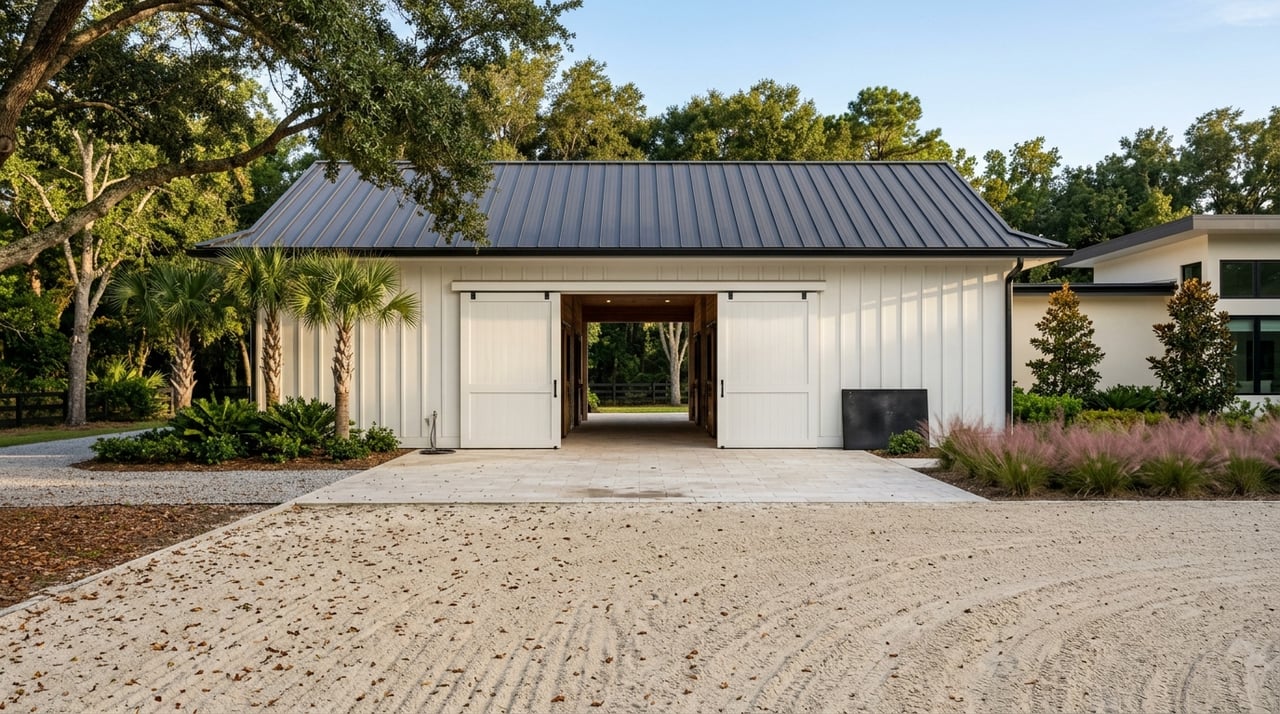
If you want room for horses, Odessa can offer appealing possibilities, but not every acreage property will work the same way. Zoning, scale, land condition, and access all need a closer look.
Pasco County’s A-C district allows agriculture, pasturage of cattle and horses, stables, barns, and related farm uses. A-R, AR-1, and AR-5 are also rural-oriented districts, and AR-5 is expressly intended to provide a rural or farm atmosphere.
Some district rules also get more specific about scale. The county rules referenced in the research include a five-acre minimum for certain livestock uses and a one-acre-per-three-grazing-animals standard for riding stables.
That is why zoning should be one of your first checkpoints. If your goal is to keep horses, add a barn, or use the land in a certain way, confirm that the parcel’s rules support that plan.
Many buyers assume that having horses automatically means a property qualifies for agricultural tax treatment. In Pasco County, that is not how it works.
The Pasco Property Appraiser says agricultural classification applies only to bona fide commercial agricultural use. Hobby farms used only for personal use do not qualify.
The timing matters too. Applications are filed between January 1 and March 1, and if a qualified property sells, the agricultural classification is removed at the end of that tax year, with the new owner needing to refile the following year.
A property can have acreage and still fall short for practical horse use. UF/IFAS emphasizes drainage, forage productivity, stocking rate, and fencing when planning horse pasture.
As a buyer, inspect the property with daily use in mind. Look at pasture condition, barn placement, fence lines, manure handling, trailer access, and whether the land can realistically support the number of horses you plan to keep.
Acreage on paper does not always equal functional horse property. The layout and condition of the land are just as important as the total size.
With lakefront or equestrian property, the details behind the listing can have a major impact on your decision. A careful review upfront can save you from buying a property that does not match your intended use.
Pasco’s Property Appraiser says its records search can provide ownership, assessments, legal descriptions, and general property information. Deed restrictions are recorded with the Clerk, and buildability questions should go to the Pasco County Zoning or Permitting Office.
For specialty property, this step is critical. You will want to verify deed restrictions, HOA rules if applicable, easements, lot boundaries, and whether your intended use is actually allowed under the parcel’s governing rules.
Acreage homes often rely on systems that need more review than a typical city utility setup. In Pasco County, septic permitting and inspection are handled through the Florida Department of Health in Pasco County, and new installations, repairs, modifications, and approvals of existing systems require a permit.
Florida DOH also says private well owners should test water for bacteria and nitrate at least once a year. The state does not require well sampling when a single-family home is sold, so if a property has a private well, it is smart to evaluate water quality during your diligence period.
Even smaller projects can come with restrictions. Pasco’s building permit exemption guidance says exempt work still has to meet setback rules, and the exemption list does not apply to parcels in special flood hazard areas.
The county also notes that some small sheds of 150 square feet or less may be exempt if they are DBPR-approved and properly tied down, but they still must meet setback and floodplain rules. If you plan to add a shed, fencing, or other improvements, confirm the requirements before closing.
One of the smartest moves you can make is to treat this purchase like a specialty acquisition from the start. The most useful professionals for Odessa lakefront or equestrian properties are often:
This kind of vendor stack helps you review boundaries, restrictions, flood risk, water systems, shoreline work, and setback compliance. When the property is more complex, your team should be more specialized too.
The right Odessa property can deliver a lifestyle that is hard to match, whether that means sunset lake views, room for horses, more privacy, or all of the above. But the best purchases usually happen when you evaluate the property as a full land-use decision, not just a home tour.
If you start with zoning, access, systems, and improvement potential, you will be in a much stronger position to decide whether a property truly fits your goals. That kind of clarity can help you move forward with confidence and avoid expensive surprises later.
If you are considering lakefront or equestrian property in Odessa, working with an experienced local team can make the process far more manageable. The Pithers Group brings polished guidance, strong local knowledge, and a steady approach to complex purchases across Tampa Bay.
Stay up to date on the latest real estate trends.
Whether you're a first-time buyer or a seasoned investor, connecting with us means staying ahead of the curve. Contact the Pithers Group today and unlock a world of possibilities.